
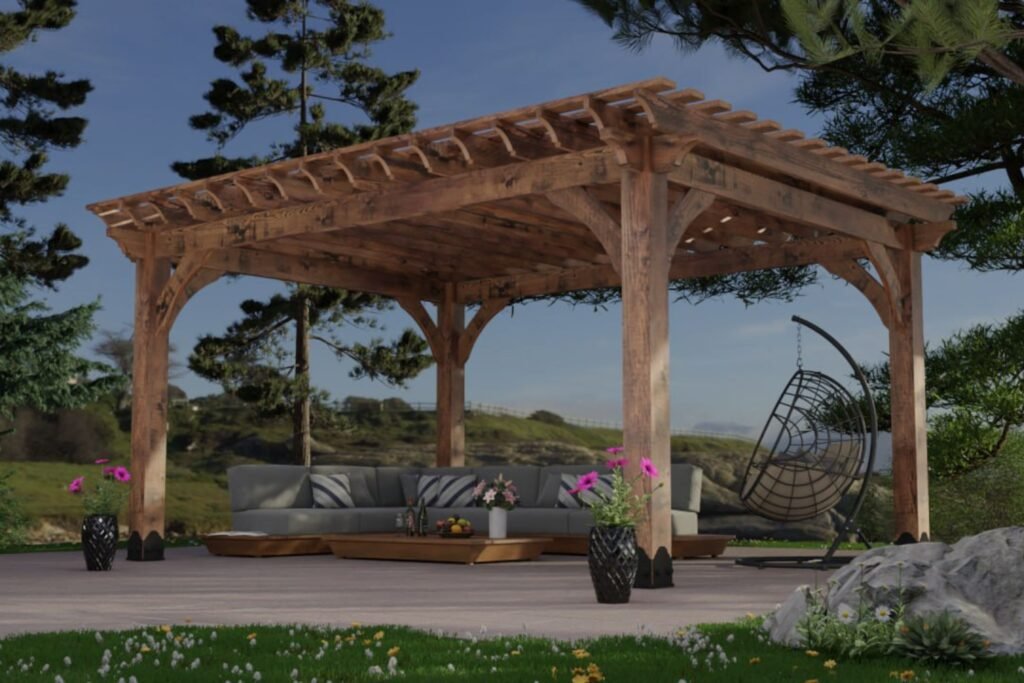
Building a strong online presence is no longer optional for outdoor structure brands. It is the difference between being found by serious buyers and being hidden behind competitors with better websites, clearer product pages, stronger visuals, and smarter content.
When people shop for pergolas, gazebos, pavilions, garden rooms, shade structures, or backyard living products, they usually start online. They compare styles, materials, installation options, pricing expectations, and trust signals before they ever speak to a sales team.
For outdoor structure brands, the challenge is simple but demanding. You are not only selling timber, metal, shade, or shelter. You are selling a lifestyle upgrade. You are selling a better backyard, a more useful garden, a comfortable outdoor dining space, or a peaceful place to gather with family. Your online presence must help people picture that transformation clearly.
Why Online Presence Matters for Outdoor Structure Brands
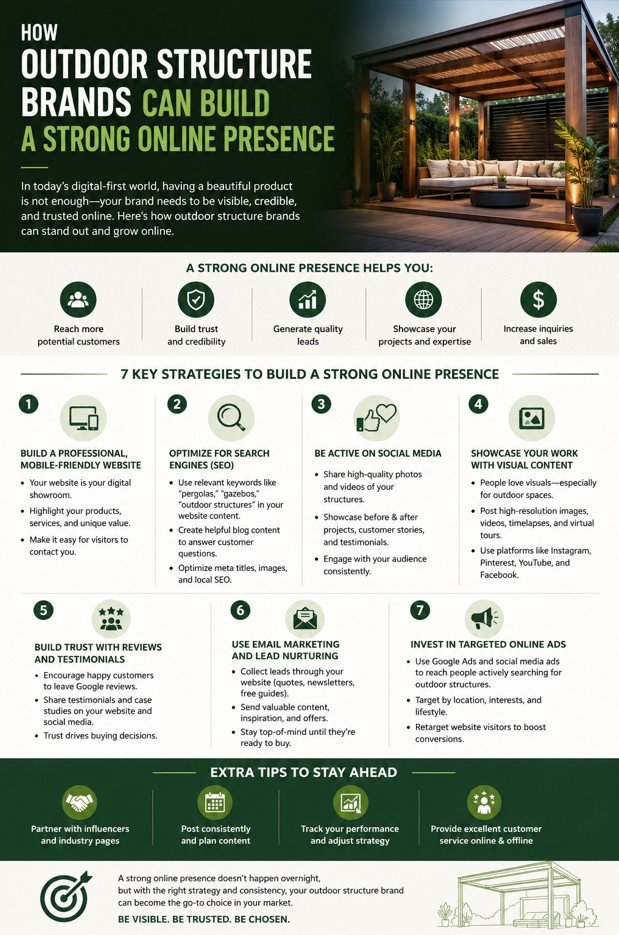
Outdoor structure products are usually considered purchases. Buyers do not make decisions in one minute. They often research for days, weeks, or even months. A homeowner may start with a simple search for garden shade ideas, then compare pergolas, pavilions, gazebos, timber structures, and covered patios before choosing a supplier.
This means your brand must appear at different stages of the customer journey. Some visitors are just looking for inspiration. Others are comparing materials. Some want a quote. Others need reassurance about durability, climate, maintenance, installation, and long-term value. A strong online presence helps you answer all these questions before the buyer contacts you.
It also builds trust. If your website looks outdated, your product images are weak, or your information is thin, customers may assume your service is the same. But when your digital presence feels polished, helpful, and easy to understand, your brand feels more reliable.
Start With a Clear Brand Position
Before creating content, improving SEO, or running ads, outdoor structure brands need clear positioning. You need to know exactly what your brand stands for. Are you focused on luxury backyard structures? Custom timber pavilions? Affordable garden shade solutions? Modern outdoor living? Sustainable materials? Fast installation?
Your positioning should answer three questions:
- Who do you serve?
- What type of outdoor structures do you offer?
- Why should buyers trust your brand over another company?
A vague brand message makes your website feel weak. A clear message makes every page easier to write. For example, a company selling premium timber structures should not sound like a discount patio furniture shop. A brand serving cold-climate homeowners should talk about snow loads, seasonal durability, wood treatment, and weather resistance.
Your homepage should make this clear within seconds. Visitors should understand what you sell, where you serve customers, and what makes your products different.
Build a Website That Feels Visual, Simple, and Trustworthy
Outdoor structure brands need websites with strong visuals. People want to see what the finished product looks like in a real garden, patio, backyard, or commercial outdoor space. A plain website with small images will not create enough desire.
Your website should include high-quality photos, clean navigation, fast loading speed, and clear calls to action. Visitors should easily find product categories, project galleries, service areas, pricing guidance, FAQs, contact forms, and quote request options.
A good outdoor structure website should include:
| Website Section | Why It Matters |
| Homepage | Creates the first impression and explains your brand quickly |
| Product pages | Helps buyers compare structures and understand options |
| Gallery | Shows real results and builds visual trust |
| Blog | Attracts search traffic and answers buyer questions |
| Service area pages | Helps rank for local or regional searches |
| About page | Builds credibility and human connection |
| Contact or quote page | Turns visitors into leads |
Keep the design clean. Do not overload pages with too many colors, animations, or long blocks of text. Outdoor living products already carry natural beauty. Your website should support that beauty, not distract from it.
Create Product Pages That Answer Buyer Questions
Many outdoor structure brands make one big mistake. They show the product, but they do not explain it enough. A buyer needs more than a beautiful image. They want to know what the structure is made from, where it works best, how it handles weather, what sizes are available, and what maintenance it needs.
Every product page should feel like a helpful sales conversation. It should explain the product clearly without sounding too technical. If a customer is looking at something like Timber Frame Pavilion (Lt), the page should explain what the design offers, where it fits best, and why it may suit certain outdoor spaces.
A strong product page can include:
| Product Page Element | Purpose |
| Product overview | Gives a quick explanation of the structure |
| Key benefits | Shows why the product is useful |
| Material details | Builds confidence in quality and durability |
| Size or design options | Helps buyers imagine the right fit |
| Climate suitability | Answers weather-related concerns |
| Installation information | Reduces hesitation |
| FAQs | Handles common objections |
| Quote button | Encourages action |
The goal is not to make the page long for no reason. The goal is to make the page complete enough that buyers feel informed.
Use SEO to Reach Buyers at Every Stage
Search engine optimization is one of the strongest tools for outdoor structure brands. Many buyers search online before choosing a company. They may search for broad ideas first, then narrow down into product-specific or location-specific terms.
For example, early-stage buyers may search:
| Search Intent | Example Topic |
| Inspiration | Backyard pavilion ideas |
| Comparison | Pergola vs gazebo |
| Material research | Best timber for outdoor structures |
| Climate concerns | Best outdoor structures for snowy areas |
| Buying intent | Custom timber pavilion supplier |
| Location intent | Outdoor pavilion company in Canada |
Your website should include content for each search intent. Do not only focus on product pages. Blog posts, guides, comparison articles, buying guides, and maintenance content can bring visitors to your site before they are ready to buy.
A country-specific keyword such as Timber Frame Pavilion (Light Timber) for Canada can work naturally in content about Canadian outdoor structure needs, climate considerations, snow performance, regional design preferences, and buyer decision-making.
Publish Blog Content That Helps, Not Just Sells
A blog can become one of the most valuable parts of your online presence. But only if the content is useful. Outdoor structure buyers often have many questions. Your blog should answer those questions in a friendly, practical, and expert way.
Good blog topics for outdoor structure brands include:
| Blog Topic | Why It Works |
| Pergola vs pavilion: Which is better for your backyard? | Helps buyers compare options |
| How to choose the right outdoor structure for your garden | Targets early-stage buyers |
| Best materials for long-lasting outdoor structures | Builds trust around quality |
| How to design an outdoor dining area with a pavilion | Connects product with lifestyle |
| Timber vs metal outdoor structures | Supports comparison searches |
| How to maintain a timber pavilion year-round | Attracts owners and future buyers |
| Outdoor structure ideas for small backyards | Targets design-focused homeowners |
| What to consider before installing a backyard pavilion | Reduces buyer uncertainty |
The best content does not feel like a hard sales pitch. It educates first. Then it gently leads readers toward your products or services.
Use Visual Storytelling to Sell the Finished Lifestyle
Outdoor structures are highly visual products. A buyer needs to imagine morning coffee under a timber pavilion, family dinners in the garden, summer shade by the pool, or a cozy outdoor lounge during cooler evenings.
This is why visual storytelling matters. Use photos, videos, diagrams, before-and-after images, and lifestyle scenes. Show the structure in context. Do not only show the frame or empty product. Show furniture, lighting, plants, pathways, people, and surrounding landscape.
Strong visual content can include:
| Visual Content Type | Best Use |
| Project photos | Shows real results |
| Before and after images | Highlights transformation |
| Short videos | Works well for social media |
| 3D renders | Helps buyers preview custom designs |
| Close-up material shots | Shows craftsmanship |
| Seasonal images | Shows year-round use |
| Installation photos | Builds process trust |
Outdoor structure brands should also create image galleries by style. For example, modern, rustic, traditional, luxury, small backyard, poolside, and commercial projects. This helps buyers find designs that match their taste.
Build Trust With Proof and Transparency
Trust is a major factor in outdoor structure purchases. These products can involve serious investment, installation planning, and long-term use. Buyers want to know your brand is reliable before they request a quote.
Your website should include clear trust signals. Add testimonials, case studies, project galleries, warranty details, company background, certifications, installation process explanations, and real customer photos. If you work in specific regions, mention that clearly.
Transparency also matters. You do not always need to list exact prices if projects are custom. But you should explain what affects pricing. Buyers appreciate honest guidance about size, material, design complexity, delivery, site preparation, and installation.
A simple pricing guide can reduce hesitation. Even a “starting from” range or “what affects cost” section can help buyers feel more comfortable contacting you.
Create Service Area Pages for Local and Regional SEO
If your outdoor structure brand serves specific cities, states, provinces, or countries, service area pages can help you rank for location-based searches. These pages should not be copied and pasted with only the city name changed. Each page should have useful, location-relevant details.
For example, a Canadian service page can discuss climate, snow, wood treatment, seasonal installation windows, and outdoor living trends in that region. A USA-focused page may discuss backyard entertaining, regional architecture, sun exposure, and popular pavilion designs.
A strong service area page should include:
| Section | What to Include |
| Location-focused introduction | Explain your service in that area |
| Product relevance | Mention suitable structures for the region |
| Climate considerations | Discuss weather, sun, snow, wind, or moisture |
| Project examples | Add local or similar project visuals |
| FAQs | Answer region-specific buyer questions |
| Contact button | Make quote requests easy |
This approach helps search engines understand where your brand operates. It also helps customers feel that your company understands their local needs.
Use Social Media to Build Desire and Recognition
Social media works especially well for outdoor living brands because the products are visual and aspirational. Platforms like Pinterest, Instagram, Facebook, TikTok, and YouTube can help you show design ideas, project transformations, seasonal inspiration, and behind-the-scenes work.
Pinterest is useful for long-term traffic because people search for garden ideas, pergola ideas, backyard inspiration, patio designs, and outdoor living concepts. Instagram and TikTok are good for short visual storytelling. YouTube can work well for installation guides, product explainers, and project walkthroughs.
Social media content ideas include:
| Content Idea | Platform Fit |
| Backyard transformation reels | Instagram, TikTok |
| Pavilion design idea pins | |
| Maintenance tips | Facebook, YouTube |
| Installation process videos | YouTube, Instagram |
| Customer project highlights | Instagram, Facebook |
| Seasonal outdoor decor ideas | Pinterest, Instagram |
| Product comparison clips | TikTok, YouTube Shorts |
The key is consistency. You do not need to post everywhere every day. Choose the platforms where your buyers are most active, then create content that helps them dream, plan, and trust your brand.
Improve Lead Generation With Clear Calls to Action
A strong online presence should not only look good. It should generate leads. Every important page should guide visitors toward the next step. That could be requesting a quote, booking a consultation, downloading a design guide, calling your team, or viewing a product gallery.
Avoid vague buttons like “Learn More” everywhere. Use stronger calls to action that match buyer intent.
Examples include:
| Weak CTA | Stronger CTA |
| Learn More | View Pavilion Designs |
| Contact Us | Request a Free Quote |
| Submit | Send My Project Details |
| Click Here | Start Planning Your Outdoor Structure |
| More Info | Compare Outdoor Structure Options |
Make forms simple. Do not ask for too much information too soon. A good quote form may ask for name, email, location, project type, estimated timeline, and a short message. You can collect more details later.
Use Email Marketing to Nurture Future Buyers
Not every visitor will request a quote immediately. Some are still planning. Some need approval from a partner. Some are waiting for budget or season timing. Email marketing helps you stay connected with these potential buyers.
Offer something useful in exchange for an email address. This could be a backyard planning checklist, pavilion buying guide, pergola comparison guide, or seasonal maintenance checklist.
Then send helpful emails such as:
| Email Type | Purpose |
| Welcome email | Introduces your brand |
| Design inspiration | Keeps buyers engaged |
| Buying guide | Helps with decision-making |
| Project showcase | Builds trust |
| Maintenance advice | Shows expertise |
| Seasonal reminder | Encourages timely action |
| Quote invitation | Moves buyer toward contact |
Email should feel helpful, not pushy. A buyer who trusts your advice is more likely to choose your brand when they are ready.
Invest in Content That Supports Sales Teams
Your website and content should make the sales process easier. If your sales team answers the same questions every week, turn those answers into blog posts, FAQs, videos, downloadable guides, or product page sections.
Common sales questions often include:
| Buyer Question | Content Opportunity |
| How much does a pavilion cost? | Pricing guide |
| What material lasts longest? | Material comparison article |
| Do I need a permit? | Installation planning guide |
| Can it handle snow? | Climate suitability article |
| How long does installation take? | Process page |
| How do I maintain timber? | Maintenance guide |
| What size should I choose? | Sizing guide |
This content saves time and improves lead quality. When buyers contact you after reading helpful content, they usually understand your product better and feel more confident.
Build Authority Through Backlinks and Partnerships
Backlinks help search engines trust your website. Outdoor structure brands can earn backlinks through guest posts, supplier partnerships, local business directories, architecture blogs, garden design websites, home improvement publications, and project features.
You can also collaborate with landscapers, builders, architects, garden designers, outdoor furniture brands, and real estate professionals. These partnerships can support both SEO and referral traffic.
Good backlink content angles include:
| Partner Type | Content Angle |
| Landscaping blog | How outdoor structures improve garden design |
| Architecture site | Timber pavilions in modern outdoor living |
| Real estate site | Backyard upgrades that add home appeal |
| Garden decor site | Styling ideas for covered outdoor spaces |
| Construction blog | Material choices for durable structures |
| Local publication | Outdoor living trends in the region |
The goal is to build relevant authority. A few strong links from related websites can be more valuable than many random links from unrelated sites.
Track Performance and Improve Over Time
A strong online presence is not built once and forgotten. You need to track what works. Use tools like Google Analytics, Google Search Console, heatmaps, call tracking, and form tracking to understand how people find and use your website.
Important metrics include:
| Metric | Why It Matters |
| Organic traffic | Shows SEO growth |
| Top ranking pages | Reveals what content works |
| Form submissions | Measures lead generation |
| Call clicks | Shows buyer interest |
| Bounce rate | Indicates page relevance |
| Time on page | Shows engagement |
| Conversion rate | Measures business impact |
| Keyword rankings | Tracks search visibility |
Do not only chase traffic. A blog post with fewer visitors but high buyer intent can be more valuable than a viral article that brings the wrong audience. Focus on quality traffic, strong engagement, and leads that match your business.
Conclusion
Outdoor structure brands can build a strong online presence by combining clear branding, strong visuals, useful content, smart SEO, trust signals, and simple lead generation. Your website should not only display products. It should guide buyers from inspiration to confidence.
The best digital strategy helps people imagine their finished outdoor space while also answering practical questions about materials, cost, durability, installation, and maintenance. When your online presence feels helpful, polished, and trustworthy, your brand becomes easier to choose.
For companies selling pergolas, pavilions, gazebos, timber structures, and garden living products, the opportunity is huge. Buyers are already searching online. Your job is to show up with the right message, the right visuals, and the right answers at the right time.